
Hey Son! For us Koreans, rice is something we take seriously, and it’s more than just a side dish. It’s actually the main dish that everything else revolves around.
As Koreans, rice is our pride and joy, and we live on rice-powered living. It’s the power generated by eating rice that keeps us going every day. And the better the rice, the tastier the meal. That’s why we invest time and effort into finding the perfect rice – one that’s transparent, glossy, and sticky when cooked just right.
Even though South Korea is a small country, we have many varieties of rice that vary in nutrients and taste depending on the region where it’s grown. It’s important to us to find the rice that suits our preferences and values the taste of rice.
But in our busy lives, we often forget to pay attention to something as simple as cooking rice. I believe that rice is a crucial food that supports all other foods, so it deserves a little more respect and attention. Let’s bring out the true flavor of rice by cooking it properly and treating it with the respect it deserves.
To cook delicious rice, we follow a few simple steps. First, we choose rice that’s been produced and polished within the past year, with a protein content of 6% or less. This makes the rice soft and sticky and enhances the taste. We also look for rice that’s shiny, transparent, and glossy – the signs of good quality rice.
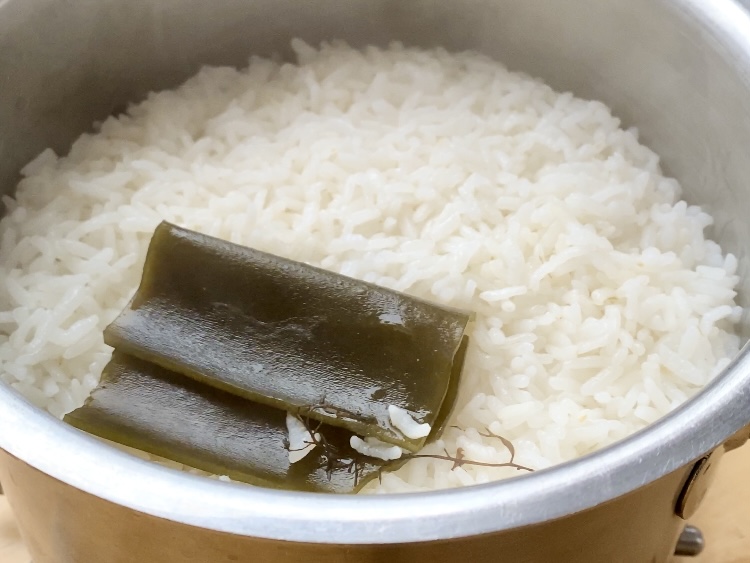
Next, we follow a specific cooking method for perfectly cooked Korean rice. We rinse the rice gently and quickly to avoid losing nutrients, even if it’s pre-washed. Then we add a piece of kelp for that umami* flavor that makes the rice much tastier.
The amount of water is crucial for cooking perfect rice, and we soak the rice for 30 minutes before cooking. This allows the rice to absorb water and cook perfectly through to the inside, resulting in moist, shiny, elastic, and delicious rice. The cooking time is reduced and the nutrition is increased, too.
We adjust the heat and timing accordingly to achieve the perfect rice. After removing the pot from the heat, we let the rice rest for 10 minutes to absorb the remaining moisture. We also gently fluff the rice to prevent it from clumping together in the pot.
One of the secrets to making delicious rice is the Nurungji, the brown crust that forms at the bottom of the pot. It gives a savory smell that permeates the rice and enhances its taste.
Cooking rice may seem simple, but it’s actually a delicate task that requires patience and attention to detail. We must carefully watch the rice while it cooks to avoid burning or undercooking it. Even with a recipe, it takes practice and experience to make delicious rice every time.
The simpler and easier the task, the more patience and effort are needed to do it well.
For us Koreans, rice is more than just a staple food – it’s a way of life. It’s a food that brings us together and gives us energy and nourishment. So, sweetie, let’s keep the tradition alive by respecting and enjoying our rice.
Ingredients
- Rice (1 cup = 2 servings of rice)
- Water (measure with your finger)
- 1 Piece of kelp
Instructions
- Put rice in a pot and wash gently 3-4 times. (Be sure to wash even pre-washed rice.)
- Add water (Place your index finger on top of the rice grains. When the water reaches the first knuckle, that is the right amount.)
- Add the kelp then soak for 30 minutes.
- Cook the rice on high heat. When it starts boiling, reduce heat to medium.
- When the water on the surface has almost evaporated, reduce the heat to low, cover and simmer for 10 minutes. (Never ever open the lid at this time.)
- Turn off the heat. The rice must now rest for 10 minutes. (Don’t open the lid until the 10 minutes are up!)
- Open the lid, remove kelp and thoroughly, but gently, fluff the rice. Otherwise, it will all become one clump.
- Enjoy the Nurungji before your meal
Ta-da! Easy peasy!
Mom’s Tips
If you are busy, buy an electric rice cooker.
An electric rice cooker only needs you to wash the rice and press a button. (But you can’t get the same taste with an electric rice cooker)
Hope you enjoy it!
*What is Umami
Umami is the fifth taste sensation, described as savory and complex, often found in slow-roasted meats and homemade stocks. It’s a distinct taste separate from sweet, sour, salty, and bitter. Without umami, food can taste bland and one-dimensional.